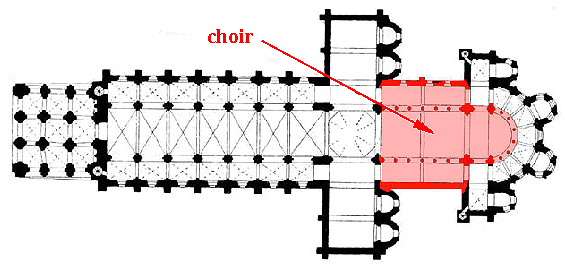
can be seen in this plan. When we discussed Shakespeare's Sonnet 73, we saw that the leafless tree boughs and "bare ruined choirs" function as images of aging. The speaker appears to be in the late autumn of his life, while the beloved friend he addresses is younger.
We'll pursue our reading of this sonnet, along with others, in the coming days, and also move into our in-class reading of Fences.
Question: What is the speaker's message to his younger friend in Sonnet 73? What do you think of the other sonnets in your packet? Post some preliminary thoughts on the blog!

The speaker's message to his younger friend is that he is going to die and that he shouldn't leave him and should enjoy his lasts moments with him.
ReplyDeleteWe can relate other poems about death to Shakespeare's sonnet like Seamus Heaney's poem about his souvenirs of his dead mom or John Keats poem about his fear of dying.
These three poems are very interesting to look at together because they all represent different aspects of death.
Good! So how does Keats comment on death?
ReplyDeleteWhile for Shakespeare, the poet’s obsession is about ostentatious nonsense, for Keats, it is about an unrelenting obsession about his own imminent death. Specifically, his concern is about a deep foreboding that he will be unable to reap the harvest his images, ideas, the paintings to be created by strokes of words that will never appear on a canvas. But, of even greater importance to the poet, is his keen awareness of “high romance, there shadows traced with the magic hand of chance.” His is a spectacular view of love, limitless with edges that can barely be touched and an essence that is almost beyond reach. Whereas, for Shakespeare, love transforms his every failing, for Keats, love is unobtainable and will never occur.
ReplyDeleteIn Sonnet #73, Shakespeare is preparing his friend not only for his literal imminent death, but also for the metaphorical death of his youth and passion. The poem highlights Shakespeare's mental anguish and anxiety concerning his impending death and his dying youth. Shakespeare is comparing himself to autumn, the passing of the day, and an extinguishing fire. Shakespeare is revealing that he is an old man and that soon his time will come and he will burn out like a fire. One could possibly read this sonnet as a vehicle for Shakespeare to express his own insecurities concerning aging and the loss of his youth. Perhaps Shakespeare is apprehensive that his friend sees him solely as an aging man. Thus Shakespeare takes it upon himself to write a sonnet to impose his own view on how his friend should see him: "In me thou see'st." He is implicitly urging his friend to stay and love him more. Shakespeare is coming to terms with the evanescence of life, his aging, and his small place in time.
ReplyDeleteUnlike Shakespeare, Keats is less focused on the notion of aging; rather, he fears that time will run out before he will be able to fulfill his charge as a gifted writer. Keats is obsessed that in the face of fleeting time, he will be unsuccessful to harvest and express on paper his "teeming brain,” his fertile imagination. The sonnet is rich and abundant with the imagery of harvesting. A harvest is a fulfillment in time, an accretion of something valued and treasured, and Keats needs to reap his "full ripen'd grain" and create a piece of work that will immortalize him and his genius forever. In the end, Keats resolves and mitigates his fear by stating in the last line of the sonnet the insignificance and unimportance of humans, love and fame to the world stage.
For these two poems, time seems to be the ultimate enemy. Its power is incredibly awesome and no king or human can cheat it. Time is the Achilles heel of the human. Time can rob the youth from men, and prevent a poet from immortalizing himself or his gift of writing.